July 14th, 2005
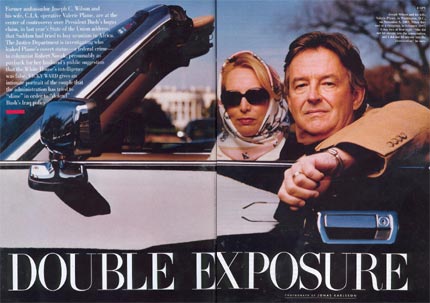
Was Plame, in fact, undercover when she was outed?
Novak says the C.I.A. told him “the exposure of her name might cause ‘difficulties’ if she travels abroad,” but that “[i]t was well-known around Washington that Wilson’s wife worked for the C.I.A. . . . Her name, Valerie Plame, was no secret either, appearing in Wilson’s Who Who’s in America entry.”
Hitchens sneers that she “shuttle[d] dangerously ‘undercover’ between Georgetown and Virginia.”
Clifford May lets slip that he knew her name and identity before Novak’s column outing her: “I learned it from someone who formerly worked in the government and he mentioned it in an offhand manner, leading me to infer it was something that insiders were well aware of.”
On the other hand, Tim Noah uses a “simple test: did her friends and neighbors know she worked for the C.I.A.? They did not. Ergo, she was undercover.”
Addendum (7/17/2005): Joe Wilson admits, “My wife was not a clandestine officer the day that Bob Novak blew her identity.”
Addendum (7/21/2005): Yet it’s not that cut and dry, as Time magazine reports in two articles this week:
[A]s recently as the late 1990s she was working as a nonofficial cover (NOC) officer, one of a select group of operatives within the CIA who are placed in neutral-seeming environments abroad and collect secrets, knowing that the U.S. government will disavow any connection with them should they be caught. NOC officers cost millions of dollars to train and support. As a result of the leak, Plame is no longer able to work undercover.
[W]hile she may no longer have been a clandestine operative [at the time of the leak], she was still under protected status. . . . In the wake of the disclosure, foreign intelligence services were known to have retraced her steps and contacts to discover more about how the CIA operates in their countries.
Addendum (7/24/2005): Or is it, as the New York Times reports?
[Some] former C.I.A. officers say that by 2003 Ms. Wilson’s cover was already thin. Any serious inquiry would have revealed that Brewster Jennings [& Associates, the Boston shell company the C.I.A. set up] was little more than a mailbox. . . . Ms. Wilson . . . had been working for some time at agency headquarters in Langley, Va. And her marriage to a senior American diplomat, Mr. Wilson, ended any pretense of having no government ties.”At that point, she looks, walks and quacks like an overt agency employee,” said Fred Rustmann, a C.I.A. officer from 1966 to 1990, who supervised Ms. Wilson early in her career and calls her “one of the best, an excellent officer.”
Addendum (7/28/2005): Slate explains the different levels of cover in the C.I.A.
July 10th, 2005
Until Joe Wilson’s op-ed appeared on July 6, 2003, the White House had doggedly defended the president’s claim, in his 2003 State of the Union address, that Iraq “recently sought significant quantities of uranium from Africa.” Not even the announcement, five weeks later, by the director general of the International Atomic Energy Agency that this claim was based on fake documents prompted any retraction. Instead, only after Wilson went public did C.I.A. Director George Tenet, just days later, concede that the uranium reference “should never have been included in the text written for the president.”
Rich:
The pettiness of this retribution [the leaking of the identity of Wilson’s wife] shows just how successfully Mr. Wilson hit the administration’s jugular: his revelation threatened the legitimacy of the war on which both the president’s reputation and reelection campaign had been staked. . . . That the Bush administration would risk breaking the law with an act as self-destructive to American interests as revealing a C.I.A. officer’s identity smacks of desperation.
Addendum (10/2/2005): The Post elaborates:
The campaign to discredit Wilson’s accusations came at a critical moment in the Bush presidency. It occurred a few months after the United States invaded Iraq and at a time when Bush, Cheney and the entire administration were under extraordinary pressure to back up their prewar allegations that Iraq had large stockpiles of chemical weapons and was working on a nuclear weapons program. The Niger claim was central to the White House’s rationale for war, and Wilson was on a one-man crusade to disprove it. Early on, his actions caught the eye of the vice president’s office, which was often the emotional and intellectual force pushing the United States to war based on fears of potential weapons of mass destruction in Iraq. Cheney and Libby were intimately involved in building the case for the war, which included warnings that Iraqi President Saddam Hussein was actively pursuing nuclear weapons.
July 7th, 2005
The Los Angeles Times compiles a helpful Q&A (as does the Washington Post). From the Times:
Q: Administration officials signed agreements saying that reporters were free to reveal their identities. Despite that, why won’t reporters name their sources?
A: Miller, Cooper, and other reporters say such “blanket waivers” are not truly voluntary. Officials may have signed them fearing that, if they didn’t, they could be punished or fall under suspicion. Cooper and other journalists said they would talk about their sources only after being convinced that the officials’ willingness to be identified was voluntary, not coerced.
Addendum (7/9/2005): In Matt Cooper’s words:
I am with Judy that these government-issued waivers that the prosecutor has been handing out are not worth the paper they’re written on. . . . It’s coercive. It cannot be considered voluntary.
For C00per, a voluntary waiver must be “specific, personal and unambiguous.”
Addendum (7/15/2005): Floyd Abrams describes the government-issued waivers as “preprinted forms from the Department of Justice that people were instructed to sign by their superiors.”
Another question arises: If Fitzgerald knows who the government officials are, why does he need to question Miller and Cooper?
Answer: To corroborate information he has gathered during his investigation. As a general rule, prosecutors say they would never rely solely on notes taken by someone without also interviewing the note-taker.
July 6th, 2005

1. Judy Miller’s going to jail while Matt Cooper will testify.
2. Cooper and Miller now face four instead the original 18 months of jail, since (1) civil contempt is meant to be coercive rather than punitive, and (2) only four months remain in the term of the current grand jury investigating the case.
3. The real SOB is the leaker or leakers. “Last night I hugged my son goodbye and told him it might be a long time before I see him again,” Cooper told the court. Fortunately, just before today’s hearing, he received, “in somewhat dramatic fashion,” a direct personal communication from his source freeing Cooper from his commitment to keep the source’s identity secret.
July 5th, 2005
Many of us would say that we believe in a philosophy of live and let live. Most of us, however, probably aren’t awakened at 3 a.m. on consecutive weeknights by johns leaving a brothel in the apartment next door. Most of us probably don’t happen upon the sale of cocaine in our driveway.
Indeed, it’s one thing to support decriminalizing prostitution and drugs from an ivory tower. But now that I’ve graduated college, and am living on my own, I wonder if the ban on these so-called victimless crimes is, in fact, reasonable?
A libertarian would argue that what’s immoral should not necessarily be illegal. Paying for sex and getting high may be self-destructive, but both are voluntary choices.
To put it another way, freedom is not coextensive with virtue; vices should not be crimes. In fact, vice often permeates a free society, which imposes on each individual the responsibility to tolerate objectionable behavior. Moreover, who’s sleeping with whom and who’s using what neither harms me nor infringes my rights.
Critics respond that the everyday consequences of decriminalization outweigh abstract notions of unfettered liberty. For instance, after promising riches to young women, pimps keep them tethered to the netherworld through blackmail, inflating their back pay, and even old-fashioned coercion. With respect to drugs, toking up marijuana is allegedly a gateway to shooting up heroin.
These concerns are real, yet they only tell half the truth. In short, the concerns largely arise not because of the crimes themselves, but because of the laws that criminalize the said acts.
It’s less complicated than it sounds.
For instance, contrast black markets, under which prostitution and illegal drug use occur, with free markets. Owing to the dearth of competition and the risk of being busted or extorted, black markets are more expensive and more dangerous than free markets. While black markets incubate graft and omertas, free markets encourage written contracts and public scrutiny. While justice in the black market comes at the barrel of a gun, justice in the free market comes in a courtroom.
Specifically, under current law, both prostitutes and clients lack any legal recourse—if, say, she passes onto him a sexually transmitted disease or if he physically abuses her. Similarly, try getting a refund from a dealer who sold you schwag instead of something hydroponic. Decriminalization would make fraud legally enforceable and shine some much-needed sunlight into these no-man’s-lands.
Indeed, if we were to treat sex and drugs as we do booze, then many hookers and pushers would go legit or go out of business. Instead of employing backseats and back alleys, they could conduct their affairs in offices—in fear not of the FBI but of the IRS.
Furthermore, under current law, two-thirds of the federal government’s budget for the war on drugs goes to incarceration rather than treatment. Surely, however, nonviolent users would be better served by spending time with physicians and psychiatrists than doing time with rapists and robbers. In fact, studies show that prison does little to fight addiction, whereas rehabilitation helps the individual to break his dependency—and thus check the aforementioned gateway.
The world’s oldest trade and perhaps its most profitable one have always outwitted attempts at suppression; no amount of legislation has, or will, defeat man’s yen for pleasure. We would do better as a people and a polity if we recognized this stubborn fact.
July 4th, 2005
Like Dinesh D’Souza, I’ve long thought that Martin Luther King Jr.—given his “I Have a Dream” speech, “that one day my four little children will grow up in a nation where they will be judged not by the color of their skin but by the content of their character”—would have opposed affirmative action. After all, a colorblind society should reject color-based policies.
But as Eric Foner shows in an essay for Slate from 1996, King most definitely would have supported the hand up:
In Why We Can’t Wait, published in 1963 as the movement to dismantle segregation reached its peak, King observed that many white supporters of civil rights “recoil in horror” from suggestions that blacks deserved not merely colorblind equality but “compensatory consideration.” But, he pointed out, “special measures for the deprived” were a well-established principle of American politics. The GI Bill of Rights offered all sorts of privileges to veterans. Blacks, given their long “siege of denial,” were even more deserving than soldiers of “special, compensatory measures.”King said much the same thing in his last book. Where Do We Go From Here was published in 1967, and in the intervening four years, King’s optimism had given way to foreboding prompted by the emergence of a white backlash and the realization that combating the economic plight of black America would prove far more difficult than eliminating segregation. He called for a series of programs, including full employment and a guaranteed annual income, to uplift the poor of all races. But he saw no contradiction between measures aimed at fighting poverty in general and others that accorded blacks “special treatment” because of the unique injustices they had suffered. “A society that has done something special against the Negro for hundreds of years,” he wrote, “must now do something special for him.”
Further, to compare Jim Crow to affirmative action is wrong and offensive:
Segregation was not simply a matter of racial classification (or “thinking by race,” as Justice Antonin Scalia has written) but part of a complex system of racial subordination whose political, economic, and social elements all reinforced one another. The slogan of the 1963 March on Washington was not colorblind laws but “Jobs and Freedom,” and the movement’s ultimate goal, King insisted, was to “make freedom real and substantive” for black Americans by absorbing them “into the mainstream of American life.”This goal remains as elusive today as it was during King’s lifetime. King’s real heirs are those who, like him, see affirmative action not as a panacea or an end in itself, but as one of many ways to reduce the gap between blacks and the rest of American society bequeathed to us by history.
Where does this leave me? I still oppose affirmative action, since explicitly taking account of race perpetuates racism, but it’s no longer a hot-button issue for me.
July 3rd, 2005
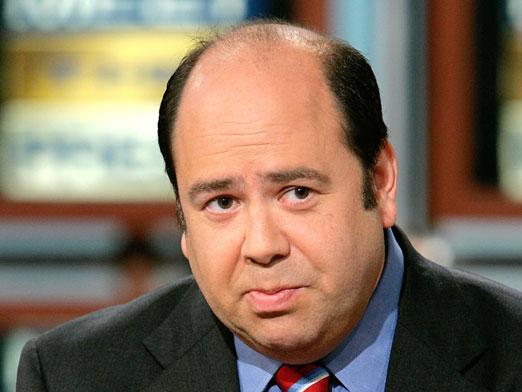
1. According to Newsweek, which quotes Rove’s lawyer, Rove signed a waiver authorizing reporters to testify about their conversations with him. Yet Cooper, who interviewed Rove for the article he coauthored, has refused to discuss his sources save for Libby, who previously waived his confidentiality agreement. Why won’t Cooper tell Fitzgerald what Rove told him?
2. Where are Joseph Wilson and his wife Valerie Plame in all this? Why hasn’t someone asked for their comments?
3. Time Inc. considers its employees’ reportorial notes company property. What’s the Times’s policy?
Addendum (7/5/2005): Scott Shane follows-up on question two with a 1,900-word article in today’s Times.
Addendum (7/6/2005): Tim Noah replies to Shane. Noah also compiles a hyperlinked timeline of Plame’s public appearances and quotes.
Addendum (7/8/2005): Slate’s Explainer columns answers question three:
Who owns a reporter’s notes? It’s a murky issue, and one that hasn’t been fully resolved in court. According to the work-for-hire doctrine prescribed by the federal copyright statute, the employer who paid for the production of a work is considered its owner. In general, any notes, tools, or other materials that were created in the process of producing that work also belong to the employer. Rules for freelancers are somewhat less clear and depend on the exact terms of the contract. Some freelance contracts state explicitly that an article is being produced as a “work for hire.”
Despite the rules laid out by the federal copyright statute, many individual newspapers have their own policies on reporters’ notes. The Wall Street Journal’s parent company declares that “any and all information and other material” obtained by its employees on the job is its exclusive property. A New York Times spokesman says reporters’ notes are their own, by long-standing convention.
July 2nd, 2005
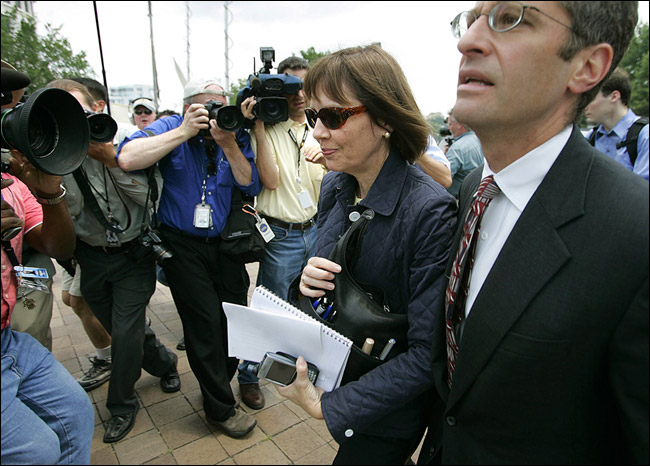
1. Fitzgerald subpoenaed Cooper on the basis on an article he coauthored for Time.com. How does Fitzgerald know that the “government officials” the article refers to spoke with Cooper and not Massimo Calabresi or John Dickerson?
2. How does Fitzgerald know that someone in the know spoke with Judy Miller, who merely conducted interviews on the matter but did not publish an article?
Addendum (7/9/2005): The New York Times answers question two: Fitzgerald has relied on secret evidence in persuading courts to order Miller jailed. He could have learned about her involvement through phone records and by questioning government officials.
Addendum (7/14/2005): Jack Shafer argues that “Fitzgerald seems bent on penalizing Miller for her knowledge of the case rather than for her proximity to the purported crime.”
Additional questions:
3. Why does Time but not the Times face contempt charges?
4. Is Karl Rove Cooper’s deep throat?
Addendum (11/21/2005): Time answers question three: “Miller . . . was originally subpoenaed along with the Times. After the newspaper said it had no relevant documents to hand over and that Miller’s notes—and the decision whether to turn them over—belonged to her alone, the court pursued only the subpoena against Miller. . . . In the Cooper case, the prosecutor went after e-mails and other information stored on computers owned by Cooper’s employer, Time Inc., which was subpoenaed and held in contempt when it refused to turn over the documents.”
June 26th, 2005
The New York Times reports: “At a moment when France is suffering from an unemployment rate of more than 10 percent, and Prime Minister Dominique de Villepin is waging what he calls a 100-day battle to combat it, [Adamski’s trip] is an effort to assure the French that Polish workers have no intention of stealing their jobs. Even if they wanted to, they could not. Under the treaty that allowed Poland and nine other countries to join the European Union last year, older members of the union can restrict access to their labor markets for up to seven years. Only Britain, Ireland and Sweden have allowed in workers from the new members.”
To be sure, the U.S. also practices nativism, particularly with respect to H-1B visas, which companies like Microsoft use to hire skilled professionals.
Fortunately, we still have people like Microsoft C.E.O. Bill Gates, who recently called the H-1B caps “almost a case of a centrally controlled economy.”
Fareed Zakaria crystallizes the point: “Every visa officer today lives in fear that he will let in the next Mohamed Atta. As a result, he is probably keeping out the next Bill Gates.”
Harry Binswanger draws the philosophical lesson, in an essay titled “‘Buy American’ Is Un-American”: “Economic nationalism, like racism, means judging men and their products by the group from which they come, not by merit.”
May 2nd, 2005
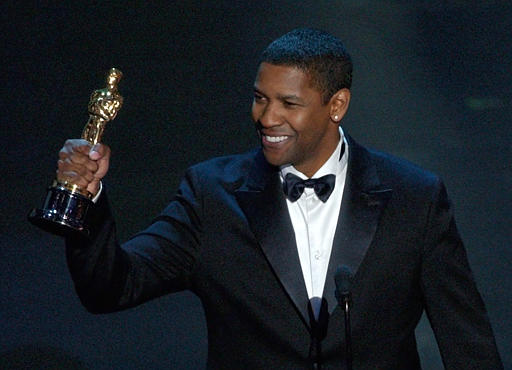
In 2002, Denzel Washington won an Oscar for his performance in Training Day, becoming the first black man to win Best Actor. Yet breaking with conventional wisdom, especially in Hollywood, Washington declared his race to be irrelevant:
“[T]omorrow, when you report this,” he said, “why not just say Denzel won the Oscar, and not mention that he is black.”
In an interview last week with Time, the rapper Nelly echoed these admirable thoughts:
Q: You co-own a NASCAR team, and you’ve done a duet with Tim McGraw. Are you trying to break racial stereotypes in entertainment?
A: I’m trying to make money, sweetheart. I’m an entrepreneur.
Incidentally, Nell’s line echoes one from the 2000 movie, Boiler Room: “There’s no honor in taking that after school job at Mickey Dee’s. Honor’s in the dollar, kid.”
Addendum (12/21/2005): The actor Morgan Freeman echoes Washington in a recent interview on 60 Minutes:
“[Freeman] says the only way to get rid of racism is to ‘stop talking about it.’
“The actor says he believes the labels ‘black’ and ‘white’ are an obstacle to beating racism.
“‘I am going to stop calling you a white man and I’m going to ask you to stop calling me a black man,’ Freeman says.
Addendum (6/14/2011): About a year ago before she was named the top editor of the New York Times, Jill Abramson was asked for her thoughts on ascending to this position, in which case she’d be the first woman in the paper’s history to do so. Her answer is spot-on:
“I don’t dwell on it … I think it would be a healthy, nice thing for the country. It is meaningful to have women in positions of leadership at important institutions in society. But, you know, there are wonderful male editors in this place who are just as capable as I am, and they could run this place exquisitely well. If it happens, it happens, if it doesn’t, it doesn’t.”
May 1st, 2005
This isn’t a 404 error; the page you’re looking for isn’t missing. I just moved it—in fact, I created a microsite for it.
April 15th, 2005

“Never doubt that a small group of thoughtful, committed citizens can change the world. Indeed, it’s the only thing that has.”
So said the anthropologist Margaret Mead. At least that’s what most of us have been led to believe.
But according to the Institute for Intercultural Studies, this quotation cannot be verified. “[W]e have been unable to locate when and where [this quote] was first cited . . . We believe it probably came into circulation through a newspaper report of something [Mead] said spontaneously and informally. We know . . . that it was firmly rooted in her professional work and that it reflected a conviction that she expressed often, in different contexts and phrasings.”
Related: “The Duties of Educated Young People.”
April 9th, 2005

Here’s a letter I recently wrote to the New York Times. Since it hasn’t run yet, I figure it’s safe to publish it myself.
The New York Times editorial board says it’s “intolerable” that anti-abortion pharmacists refuse to dispense birth control pills. I am as staunch a supporter of abortion rights as they come, but for the same reason I equally champion property rights: both represent the inalienable right of human autonomy. Just as no one should tell a woman how to dispose of her body, so no one should tell a businessman how to conduct his practice.
If one of his employees disagrees, that is between employee and employer, and if necessary, a court, to determine if a contract was breached. If outsiders disagree, we can disseminate local lists of where not to shop, and are perfectly free to shop elsewhere ourselves. The answer is not legislation, forcing our morals on others, but patronage, noncoercively using our principles to induce change.
Addendum (4/29/05): See this debate between David Boaz, Executive Vice President of the Cato Institute, and Judy Waxman, Vice President and Director of Health and Reproductive Rights at the National Women’s Law Center.
April 4th, 2005
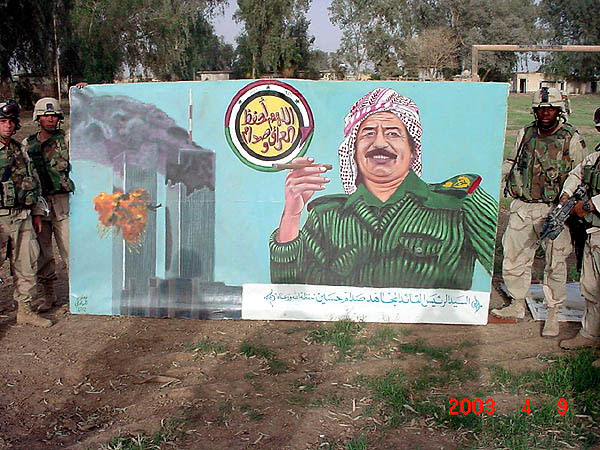
In the 16 months between Sept. 11, 2001, and the Iraq war—despite considerable efforts to entangle Saddam Hussein in the former[1]—hawks came up seriously short. Consequently, neither of the Bush administration’s two most publicized arguments for the war—the President’s State of the Union address and Secretary of State Colin Powell’s presentation to the U.N. Security Council—even mentioned the evidence allegedly implicating Baghdad in our day of infamy. Lest we misconstrue the subtext, on Jan. 31, 2003, Newsweek asked the President specifically about a 9/11 connection to Iraq, to which Bush replied, “I cannot make that claim.”
And yet, seven weeks later, a few days before the war began, the Gallup Organization queried 1,007 American adults on behalf of CNN and USA Today. The pollsters asked, “Do you think Saddam Hussein was personally involved in the Sept. 11th (2001) terrorist attacks (on the World Trade Center and the Pentagon), or not” Fifty-one percent of respondents said yes, 41% said no, and 8% were unsure. What accounts for this discrepancy between the American people and their government
Many blame the media; indeed, it has become a cliché, in the title of a recent book by Michael Massing, to say of antebellum reporting, Now They Tell Us (New York Review of Books, 2004). Such facileness, however, confuses coverage of Iraq’s purported “weapons of mass destructions”—which as some leading newspapers and magazines have since acknowledged was inadequately skeptical[2]—with coverage of Iraqi-al-Qaeda collaboration, which was admirably exhaustive.
Instead, two answers arise. First, the current White House is perhaps the most disciplined in modern history in staying on machine. Although the President denied the sole evidence tying Saddam to 9/11—an alleged meeting in Prague between an Iraqi spy and the ringleader of the airline hijackers in April 2001—the principals of his administration consistently beclouded and garbled the issue. As Secretary of Defense Donald Rumsfeld told Robert Novak in May 2002, “I just don’t know” whether there was a meeting or not. Or as George Tenet told the congressional Joint Inquiry on 9/11 a month later (though not unclassified until Oct. 17, 2002), the C.I.A. is “still working to confirm or deny this allegation.” Or as National Security Adviser Condoleezza Rice told Wolf Blitzer in September 2002, a month before Congress would vote to authorize the war, “We continue to look at [the] evidence.” Or as Vice President Richard Cheney told Tim Russert the same day, “I want to be very careful about how I say this. . . . I think a way to put it would be it’s unconfirmed at this point.” Indeed, a year later—even after U.S. forces in Iraq had arrested the Iraqi spy, who denied having met Mohammed Atta—Cheney continued to sow confusion: “[W]e’ve never been able to . . . confirm[] it or discredit[] it,” he asserted. “We just don’t know.”
A second hypothesis is that while Iraq had nothing to do with 9/11, it did have a relationship with al Qaeda. Never mind that at best the relationship was tenuous, that there was nothing beyond some scattered, inevitable feelers. That Saddam Hussein and Osama bin Laden had been in some sort of contact since the early 1990s allowed the Bush administration to shamelessly conflate their activities pertaining to 9/11 and those outside 9/11.
In this way, as late as October 2004, in his debate with John Edwards during the presidential campaign, Dick Cheney continued to insist that Saddam had an “established relationship” with al Qaeda. Senator Edwards’s reply was dead-on: “Mr. Vice President, you are still not being straight with the American people. There is no connection between the attacks of September 11 and Saddam Hussein. The 9/11 Commission said it. Your own Secretary of State said it. And you’ve gone around the country suggesting that there is some connection. There’s not.”
Two months ago, CBS News and the New York Times found that 30 percent of Americans still believe that Saddam Hussein was “personally involved in the September 11, 2001, terrorist attacks.” Sixty-one percent disagreed. This is certainly an improvement; yet the public is not entirely to blame. Nor is the Fourth Estate.
Rather, the problem lies primarily with the Bush administration. Andrew Card, George W. Bush’s Chief of Staff, explained it best. “I don’t believe you,” he told Ken Auletta of the New Yorker, “have a check-and-balance function.” In an interview, Auletta elaborated: “[T]hey see the press as just another special interest.” This is the real story of the run-up to the Iraq war: not a press that is cowed or bootlicking, but a government that treats the press with special scorn and sometimes simply circumvents it. As columnist Steve Chapman put it, the administration’s policy was “never to say anything bogus outright when you can effectively communicate it through innuendo, implication and the careful sowing of confusion.”
Indeed, now that we are learning more stories of propaganda from this administration—$100 million to a P.R. firm to produce faux video news releases; White House press credentials to a right-wing male prostitute posing as a reporter; payolas for two columnists and a radio commentator to promote its policies—the big question isn’t about the supposed failings of the press. The question is about the ominously expanding influence of state-sponsored disinformation.
Footnotes
[1] For instance, on 10 separate occasions Donald Rumsfeld asked the C.I.A. to investigate Iraqi links to 9/11. Daniel Eisenberg, “‘We’re Taking Him Out,’” Time, May 13, 2002, p. 38.
Similarly, Dick Cheney’s chief of staff, I. Lewis “Scooter” Libby, urged Powell’s speechwriters to include the Prague connection in his U.N. address. Dana Priest and Glenn Kessler, “Iraq, 9/11 Still Linked by Cheney,” Washington Post, September 29, 2003.
[2] See, for instance, The Editors, “Iraq: Were We Wrong,” New Republic, June 28, 2004; [Author unspecified], “The Times and Iraq,” New York Times, May 26, 2004; and Howard Kurtz, “The Post on W.M.D.: An Inside Story,” Washington Post, August 12, 2004.
April 4th, 2005
A version of this blog post was submitted as a nomination for the Hamilton College Christian A. Johnson Professorship.
Last summer, as I struggled to concretize a proposal for a Watson or Bristol postgraduate fellowship, I knew there was one person whose guidance I needed. I had talked with others, but no one had this person’s ability to explain any subject I’d ever asked about with such clarity, conciseness, context and cogence. Add this to patience that never flags and a wit that never runs dry, and this is why I think of Al Kelly as a personal encyclopedia.
I showed up unannounced at his office one weekday, doubtless while he was hard at work on his own research. What made our meeting special is Professor Kelly’s consistent brilliance to immediately distill the essence of an issue. Since my passion for a fellowship far outran any specific ideas for it, we spent about an hour and a half clarifying the reason for and goals of my project. Not where I would travel, or what I would do, or how I would do it, but simply why. Surely, anybody else would have either given up or moved on after say 20 minutes, but here was Professor Kelly calmly, happily connecting disparate dots, drawing out the big picture, and raising points as important as they were seemingly hidden. He knew that without a sound foundation, I was dooming myself to failure.
Yet rather than condescend whatsoever—how, with his intelligence, he does this is extraordinary—Professor Kelly never interrupted but let me hold forth as I attempted to verbalize my thoughts. Only when I finished, as is his unique habit, did he reply, speaking slowly and humbly, choosing his words thoughtfully, and asking me pointed questions. When I left, he transformed my mental chaos into lucidity.
* * *
When I returned to the Hill in the fall, having spent the summer interning at Time magazine, I decided to attend the first faculty meeting as a reporter for the Spectator. As one of maybe three separate students among maybe 150 professors, I entered the Events Barn with uncertainty. Then I spotted Al Kelly, holding court at the back of the room in his usual big chair. I breathed in relief, pulled up a seat and settled in. As the meeting proceeded, he explained some of the finer procedural points, and provided some funny human-interest anecdotes for my article. By next month’s meeting, it was as if I were a colleague.
In October the Spectator asked me to interview President Stewart about the coming presidential election. So I formulated a bunch of questions and then sought out Professor Kelly. I stopped by his office unannounced, and we spent 40 minutes ensuring that each question was relevant, distinct, compact and interesting. Forty minutes on what turned out to be 10 questions? Yes—and without checking his watch once. For unlike interviews I did for my column, this was my first interview to be printed as such, and since I’m an aspiring journalist, Professor Kelly knew it was crucial that I get it right.
Another indelible incident came a few months ago during the Susan Rosenberg affair. As I was weighing the competing arguments for Rosenberg’s appointment, I encountered Professor Kelly leaving the K-J building one night. I asked for his opinion, and in one crisp sentence he made explicit the fundamental principle at stake. I had had countless conversations about the controversy, but, again, Al Kelly was the only one who could simplify everything into a neat, small package.
He would engender another eureka moment for me during the Ward Churchill affair, but perhaps the most important one came during his European Intellectual History course, which I took as a junior. I had raised an objection to something he said, and in five words—“Watch your straw men, Jon”—he significantly altered my approach to scholarship. What this meant, he continued, was that although we all occasionally resort to weak or imaginary arguments, like straw, setup only to be summarily confuted, enlightened discourse proscribes such red herrings.
If this sounds simple, it is. Yet therein lies the beauty of this analysis, which, as is Professor Kelly’s wont, was at once readily comprehensible and crucially insightful. Indeed, his message embodied the goal of a liberal arts education: to further one’s knowledge not by expounding one’s own opinions but by understanding those of others. For this reason, I titled the column I would begin weeks later in the Spec, “No Straw Men.” Similarly, a few months later, I cited Professor Kelly’s exquisite monograph, Writing a Good History Paper, in an op-ed I wrote on journalism. He may be a historian by training, but his wisdom encompasses all disciplines.
* * *
Of course, all the above points to Al Kelly the mentor; doesn’t this guy—the Edgar B. Graves Professor of History after all—teach? Excellently. Al Kelly is of the old school of pedagogy, which means that he sees students not as incubators for his personal politics, but as diverse minds to be filled with classic knowledge. Accordingly, Professor Kelly is an eminently reasonable grader, who I would trust above all others to assess my work fairly. For rather than privilege one’s conclusion, he focuses on the way by which one reaches them. Consequently, his courses are rigorous (to set the tempo, he assigns homework not after but for the first class); challenging (a thorough grasp of the course material is never enough; students must make connections among and outside them); and thorough (you can’t cut any corners for an Al Kelly paper).
Indeed, class with Professor Kelly makes me believe that I’m getting my $35,000 worth of yearly tuition. I come away feeling enlivened and empowered, such that one day, following his Nazi Germany course, he and I continued a discussion from the library all the way to K-J—despite that I was going back to my dorm in North. Even when I didn’t do my homework, I always looked forward to each 75-minute session, because in simply listening to Professor Kelly lecture, I learned as much about that day’s topics as about life. Where else would I hear about the so-called four lies of modernity? (The check’s in the mail. I caught it from the toilet seat. I read Playboy for the articles. And it’s not about the money.)
Finally, rather than ask students just to defend or argue against a view, Professor Kelly requires that we engage it creatively. One typical question, from a final exam, went like this: pretend you’re Mary Wollstonecraft, and write a book review of Edmund Burke’s Reflections on the Revolution in France. Equally impressive is his feedback on our answers, which is why in January I asked him for feedback on my senior thesis in government. He uses few words, but they’re the pithiest I’ve ever received. Were he alive, William Strunk Jr., the initial author of The Elements of Style, would surely take great satisfaction in knowing that others take seriously his maxims to “omit needless words” and to “make every word tell.” The world could use more Al Kellys.
Unpublished Notes
I met Al Kelly in the fall of 2002, when I was a sophomore. We were serving ourselves from a buffet in the Philip Spencer House, following or before a lecture, and I wanted to strike up a conversation. So I asked him what he thought of David Horowitz’s performance in a recent panel with Maurice Isserman. I forget his answer, but when I replied that Horowitz complains he rarely gets invited to speak about the 60s, a subject on which he considers himself an authority, Al’s reply was, as usual, witty and indelible: “That’s because he’s a jerk.”
As a then-fan of Horowitz’s, I didn’t know what to say, and let the issue drop. Yet I couldn’t shake my discomfort, and when I later did a Google search, it was evident Al was right. With just five little words he had changed my mind on something about which I was convinced those with disagreed with me had to be biased.
My next encounter with Al came in my sophomore seminar, Classics of Modern Social Thought, which he teaches with Dan Chambliss. To be honest, I disliked the course, and even argued with the professors about a couple of grades. Neither budged, yet for some reason, as students were choosing our courses for the next semester, I signed up for Al’s European Intellectual History course.
Of course, when I returned to the Hill for my junior year, I had second thoughts about taking another course with Professor Kelly. Hadn’t I suffered through my sophomore seminar? Shouldn’t my grade have been higher? And who cared about European intellectual history anyway? Nonetheless, I decided to attend the first class, which turned out to be one of the best decisions I’ve made while here. Indeed, so much did I enjoy and benefit from learning under Al Kelly that next semester I took his Nazi Germany course, which proved to be my favorite.
* * *
Try as I do to stump him—averaging probably three questions a class—it seems his knowledge knows no bounds. Moreover, his ability to impart that expertise—whenever I ask, however confusedly I render my questions—never ceases to flow forth clearly, concisely, contextually and cogently.
* * *
He made a point to shake the hands of each student after the last class in his Nazi Germany course.

 Posted by Jonathan Rick in
Scholars “use an intellectual scalpel…